
President | NMLS: 1089 DRE #01517123
By Jeff Lazerson | jlazerson@mortgagegrader.com | MortgageGrader.com | March 16, 2026
Article originally posted in Orange County Register on March 12, 2026
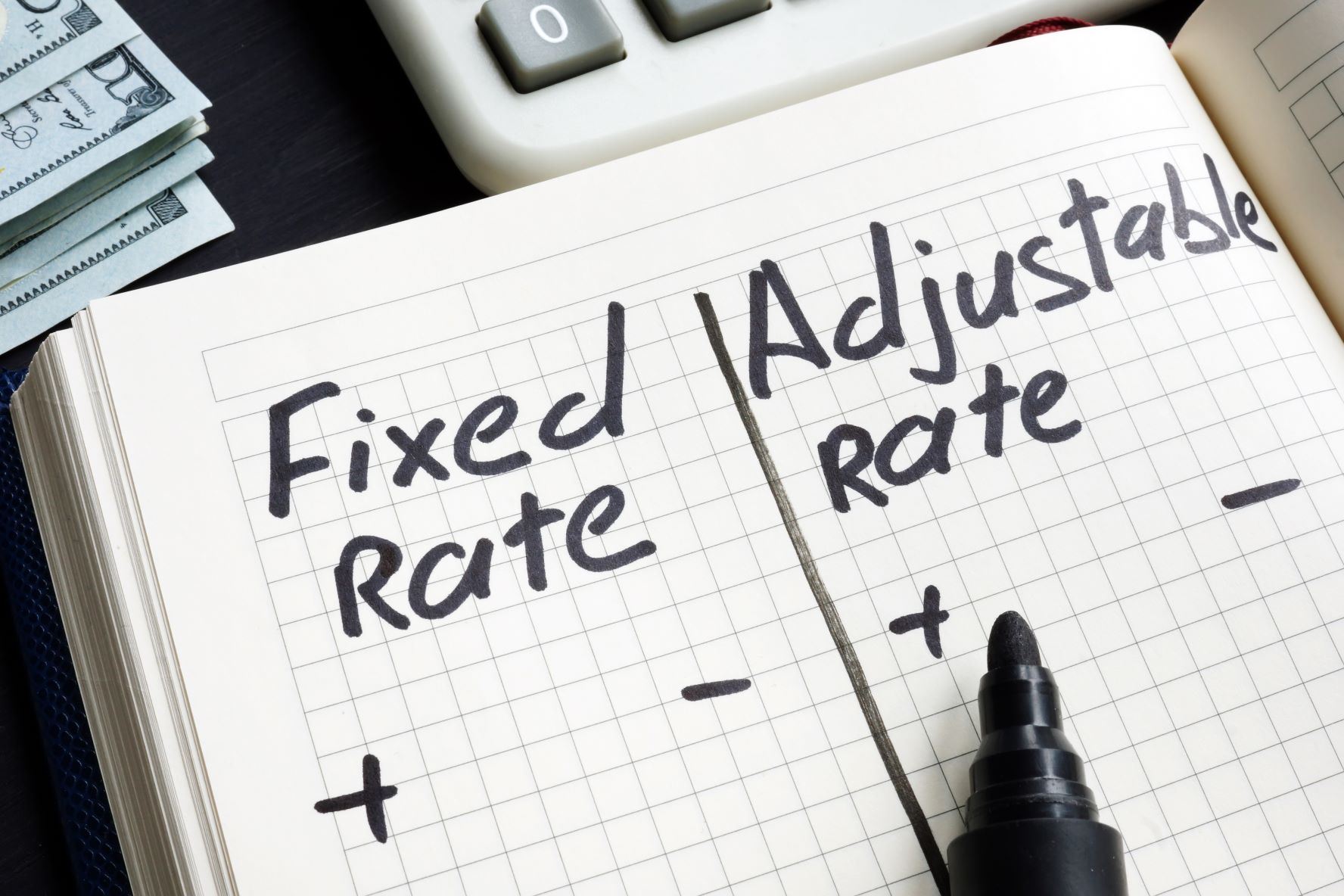
It’s a heyday for adjustable-rate mortgages.
In California last year, 31% of all mortgages used an adjustable rate structure, the highest share in three years. Nationally, 21% of homeowners used an ARM, according to the Irvine-based housing data company Cotality (formerly CoreLogic).
Currently, ARMs comprise 7% of all mortgage originations and less than 2% of loans with mortgage giants Fannie Mae and Freddie Mac’s origination, according to the Urban Institute.
Why so high?
• Affordability: A buyer can take on a more expensive home and house payment with a lower start rate. ARMs usually start at rates well below their fixed-rate cousins.
• High cost of insurance, property tax and HOA fees: Homeowners insurance and HOA fees have risen dramatically in recent years, adding to the affordability challenges. Of course, property taxes go hand in hand with the higher home prices.
• Temporary protection: ARMs offer rate protection for the first five, seven or 10 years (while home equity lines of credit adjust monthly). After the initial lock period, the rate can adjust up or down.
• Automatic benefit: ARM borrowers benefit if and when interest rates drop after the fixed period (assuming the borrower keeps the mortgage).
• Refinancing strategy: Most borrowers are betting they can refinance into a lower fixed-rate mortgage, anticipating rates are going to go down.
• Sales strategy: Others are planning to sell their homes before the fixed-rate period ends.
• Low-rate jumbo portfolio ARMs: Some banks offer aggressive pricing for jumbo ARMs using cheaper bank deposits as a funding source. (These are typically larger than what Fannie Mae and Freddie Mac accept.)
For example, paying depositors 3% and loaning those funds out at 5.5% is certainly cheaper than a jumbo fixed at 5.99%. Some banks also offer borrowers incentives, such as reducing rates if they bring over $250,000 from another institution.
Let’s compare the ARM savings to that of a fixed rate:
Today, a 30-year fixed rate mortgage can be found with a 5.875% rate. A five-year ARM (which is really a 30-year mortgage fixed for the first five years before it adjusts) is available at 5.375%.
On an $832,750 loan, the fixed-rate principal and payment is $4,926. The ARM payment is $4,663. The payment difference is $263 per month. Over 60 months or five years, the total ARM savings amount to $15,780. That’s more than $3,000 per year.
The dollar savings on a jumbo loan is much more pronounced as bigger numbers mean bigger savings.
For example, take a $1.5 million loan on a fixed rate of 5.99%. The principal and interest payment is $8,984. Take the same loan on a five-year ARM at 5.5%. The payment is $8,517. The difference is $467 per month. Over five years that’s $28,020 of savings or more than $5,600 per year.
To be fair, let’s now consider the risks of an ARM.
• Payment shock: The interest rate can rise significantly after the initial five, seven or 10-year lock-in period.
For example, take a five-year ARM starting at 5.375%. We take the index (30-day Secured Overnight Financing Rate, or SOFR, index) of 3.672% plus a margin or profit margin of 2.75%, which brings the new rate to 6.42%. Assuming $832,750, the new principal and interest payment is $5,220. That’s $557 more than the original $4,663 payment.
• Interest rate risk: The borrower assumes the risk of rates going up when the first adjustment hits. A fixed-rate mortgage has the lender bearing the risk of any rate fluctuations, not you.
• Mortgage rates go the wrong way: If mortgage rates generally go up, you might not be able to refinance into a cheaper fixed rate down the road.
Here’s something else: While researching this column, I learned that Fannie Mae offers a conversion from an adjustable-rate mortgage to a fixed-rate mortgage at the first payment adjustment — with certain conditions like being on time with your mortgage payment and the loan-to-value is 95% or less. (This means a homeowner needs at least 5% equity in the property.)
It’s not clear to me what the new rate might be when compared with the existing rate. Please call your loan servicer for more information.
Some of you might be wondering if today’s rising use of ARMs is in any way similar to the subprime mortgage meltdown that pushed the economy into the Great Recession. Short answer: no.
Today’s ARMs are different from those in 2007. For example, we don’t have prepayment penalties, catapulting rates after two years and negative amortization. Loan originators also are restricted on how much they can charge for loan origination.
So, if you are considering an ARM, here’s my litmus test for you.
Ultimately, you are going to be responsible for the good or bad consequences of choosing an ARM. If this is going to keep you up at night, worrying about where the adjustable rate will land, it’s probably a good idea to stick with the fixed rate.
If you clearly have a plan in place for what’s next (like you won’t even own the property in five years) and you are a bit of a risk taker, then you might be saving yourself a pretty penny by getting ARM’d.
Freddie Mac rate news: The 30-year fixed rate averaged 6.11%, 11 basis points higher than the previous week. The 15-year fixed rate averaged 5.5%, 7 basis points higher than the previous week.
The Mortgage Bankers Association reported a 3.2% mortgage application increase compared with one week ago.
Bottom line: Assuming a borrower gets an average 30-year fixed rate on a conforming $832,750 loan, last year’s payment was $294 more than last week’s payment of $5,052.
What I see: Locally, well-qualified borrowers can get the following fixed-rate mortgages with one point: a 30-year FHA at 5.375 %, a 15-year conventional at 5.25%, a 30-year conventional at 5.875%, a 15-year high-balance conventional at 5.625% ($832,751 to $1,249,125 in Los Angeles and Orange County and $832,751 to $1,104,000 in San Diego), a 30-year high-balance conventional at 6.125% and a jumbo 30-year fixed at 5.99%.
Eye-catcher loan program of the week: a 30-year mortgage, fixed for the first five years at 5.125%, with a 30% down payment and a 1-point cost.
Jeff Lazerson, president of Mortgage Grader, can be reached at 949-322-8640 or jlazerson@mortgagegrader.com. His website is www.mortgagegrader.com.
If you enjoyed this article and want to receive weekly mortgage news for FREE, sign up for the newsletter HERE.
President
Mortgage Grader | NMLS: 1089 DRE #01517123
