
President | NMLS: 1089 DRE #01517123
By Jeff Lazerson | jlazerson@mortgagegrader.com | MortgageGrader.com | April 6, 2026
Article originally posted in Orange County Register on April 2, 2026
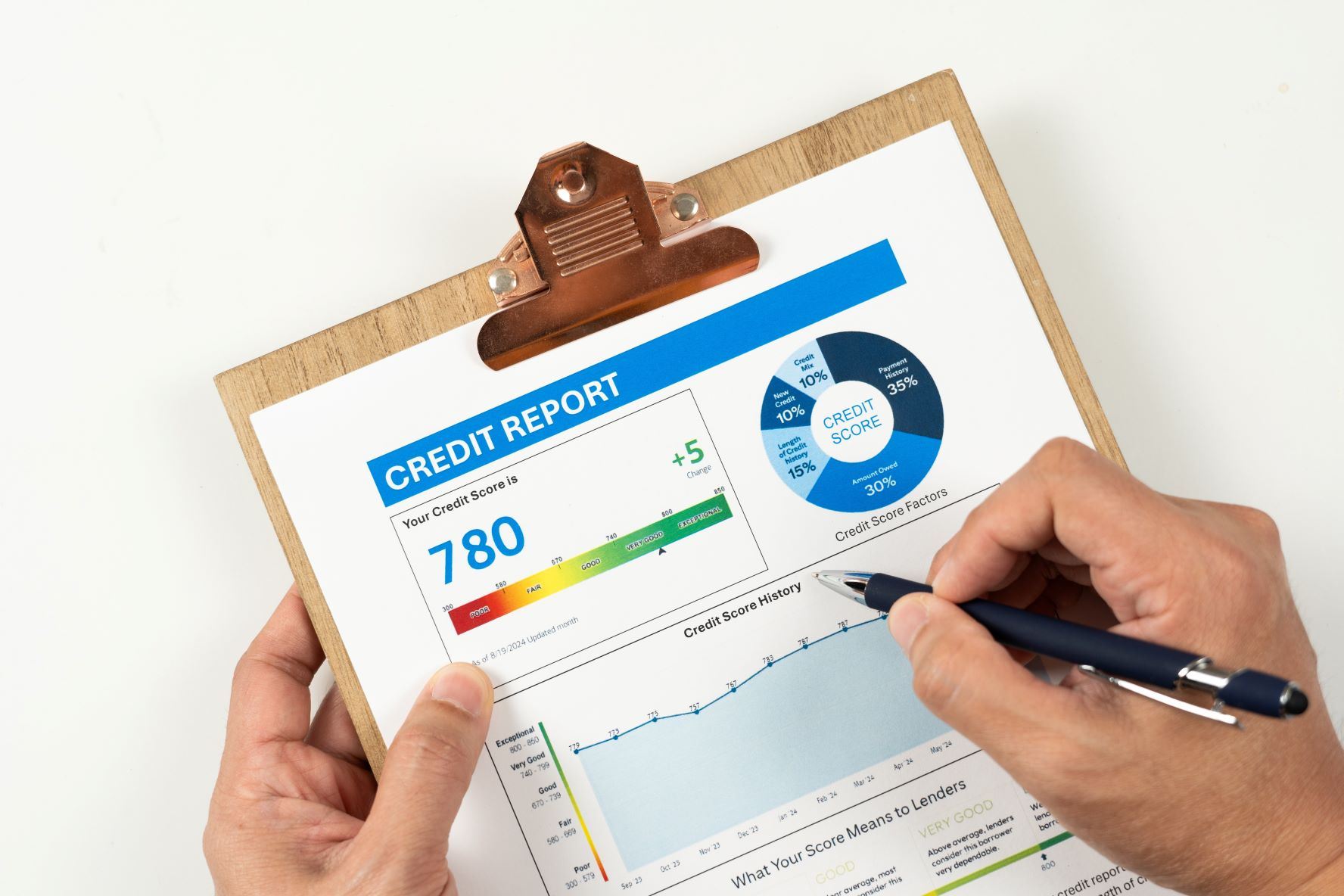
Last November, Fannie Mae announced it was no longer going to use credit report scores in underwriting decisions.
Freddie Mac made the same decision long before Fannie did.
The two organizations are government-sponsored enterprises chartered by Congress to provide liquidity, stability and affordability to the U.S. housing market.
They both use credit scores for risk-based mortgage pricing. In industry parlance, these are called loan level pricing adjustments. This means that the larger the down payment and higher the credit scores, the better the mortgage interest rate the consumer receives on credit-approved mortgages. And vice versa.
For example, a borrower with a 40% down payment and an 800 middle FICO credit score (Experian, Equifax and Transunion each attach a FICO score to the credit report using the lowest middle score of all borrowers) would see an interest rate of 5.875% on a 30-year fixed rate. Compare that to 6.625% for a borrower with 20% down and a 650 middle FICO score. That’s three-quarters of a point difference.
The consumer’s mortgage credit report cost consists of charges from the big three credit bureaus, FICO and the credit resellers who append all this information and deliver it to your mortgage lender on your behalf.
The cost for mortgage lenders or consumers (depending on who pays for it) for a tri-merged credit report with FICO scores appended could increase 40% to 50% in 2026, according to a Dec. 12 letter from the Mortgage Bankers Association to Bill Pulte, director of the Federal Housing Finance Agency — which is the conservator and regulator of Fannie Mae and Freddie Mac.
Here we are today with credit reports reaching insanely expensive prices. So far, $360 is the highest credit report cost that I’ve heard about being charged by a major lender when the loan closes for a married couple. For a single borrower: $180. There’s no charge if the loan doesn’t close.
At my shop, a single borrower or a joint (married couple) credit report was $33 four short years ago. Today, it’s $134. That’s four times the cost in just four years.
The MBA argues that the cost of FICO credit reports is just too high. And there’s not enough competition (another scoring system named Vantage Score has been approved by the FHFA, but it hasn’t been implemented yet).
More than three years ago, FHFA determined that tri-merged credit reports were not necessary for Fannie Mae and Freddie Mac loans when it announced the approval of a bi-merged credit report (using two credit reports and scores instead of three credit reports and scores).
MBA is pushing for a single credit report and score. It asked the FHFA to allow for a single credit report and score if the FICO score is 700 or better.
A single report for borrowers with good credit would encourage competition among the bureaus to improve accuracy and lower costs, according to the MBA’s Dec. 12 letter. Single-file reports are safely used in virtually every other consumer finance market, such as home equity, auto and unsecured consumer lending.
The opposing argument comes from a post written by the Consumer Data Industry Association, which represents Equifax, TransUnion and Experian. The tri-merged report promotes data accuracy, market competition and investor confidence. Eliminating it erodes the integrity of the credit reporting system and shifts risk to borrowers, investors and taxpayers.
CDIA points a finger at FICO (the credit scoring company), explaining that its costs have risen by more than 1,600% over the past five years. Their latest proposal doubles publicly disclosed prices from $5 to $10 per score while adding new operational costs and risks for resellers.
Variances across single credit reports can dramatically impact risk and pricing.
CDIA touts the real solution as fully adopting credit score competition and getting VantageScore into the marketplace as quickly as possible.
In a March 24 opinion piece published in The Wall Street Journal, the newspaper accused lenders of wanting to cherry-pick credit scores and make more loans to borrowers with poor credit and use the taxpayer as the backstop since Fannie Mae and Freddie Mac mortgages are guaranteed by the government.
It points to a new report from the American Enterprise Institute illustrating the potential for “score shopping” credit.
For borrowers with good credit scores, the difference between the highest and lowest scores on the three reports is on average 26 points. For some subprime borrowers, the difference can exceed 80 points.
Lenders would have a strong incentive to use the credit report that is most flattering to the borrower since they aren’t on the hook if the loan defaults.
My solution
President Donald Trump is all about lowering homeownership barriers for first-time buyers. One obvious way is to knock that massive credit report cost down. Yet not all creditors report to all three bureaus. The potential danger, for example, is if a bank only reported a borrower’s recent foreclosure to one bureau. There is no law that says creditors must report to any bureau, much less all three bureaus. Obviously, if the new mortgage lender picked credit bureau “B” without the foreclosure information, whereas credit bureau “A” had the negative data, a risky borrower would be getting a mortgage due to this blind spot.
The best solution would be Trump and Congress to pass a law requiring all creditors to report to all three bureaus. If that happens, nothing would get missed by choosing just one credit bureau and one score. They would all be the same. Not only would that drive down the cost of a consumer credit report (just needing one bureau and one score), but it would also force all three credit bureaus to compete on price in respect to the mortgage lender. The wholesale cost of credit would come down immensely.
Freddie Mac rate news: The 30-year fixed rate averaged 6.46%, 8 basis points higher than the previous week. The 15-year fixed rate averaged 5.77%, 2 basis points higher than the previous week.
The Mortgage Bankers Association reported a 10.4% mortgage application decrease compared with one week ago.
Bottom line: Assuming a borrower gets an average 30-year fixed rate on a conforming $832,750 loan, last year’s payment was $98 more than last week’s payment of $5,242.
What I see: Locally, well-qualified borrowers can get the following fixed-rate mortgages with one point: a 30-year FHA at 5.49 %, a 15-year conventional at 5.375%, a 30-year conventional at 5.99%, a 15-year high-balance conventional at 5.75% ($832,751 to $1,249,125 in L.A. and Orange County and $832,751 to $1,104,000 in San Diego), a 30-year high-balance conventional at 6.375% and a jumbo 30-year fixed at 6.125%.
Eye-catcher loan program of the week: a 30-year mortgage, interest-only payments, fixed for the first five years at 5.875%, with a 1-point cost.
Jeff Lazerson, president of Mortgage Grader, can be reached at 949-322-8640 or jlazerson@mortgagegrader.com. His website is www.mortgagegrader.com.
If you enjoyed this article and want to receive weekly mortgage news for FREE, sign up for the newsletter HERE.
President
Mortgage Grader | NMLS: 1089 DRE #01517123
